
Alutiiq, Russian, and American Periods
Alutiiq and Russian Periods
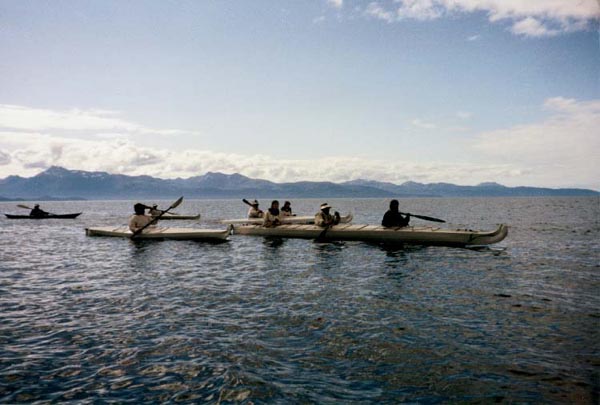
The first people of Kodiak arrived from the East in skin boats some ten thousand years ago. Known as the Alutiiq, they remained the island’s sole inhabitants until the late 1700s when Russian fur hunters in pursuit of the luxurious sea otter pelt, reached Kodiak. Finding a large otter population in the region and the Alutiiq people skilled at harvesting them, the Russians conquered local resistance and based their Russian-Alaska fur trading empire at St. Paul Harbor, or present-day Kodiak.
Photo: Alutiiq kayaks (Photo by Lena Anderson. Courtesy of the Arctic Studies Center.)
Taken from PBS's Harriman Expedition Retraced website
American Period
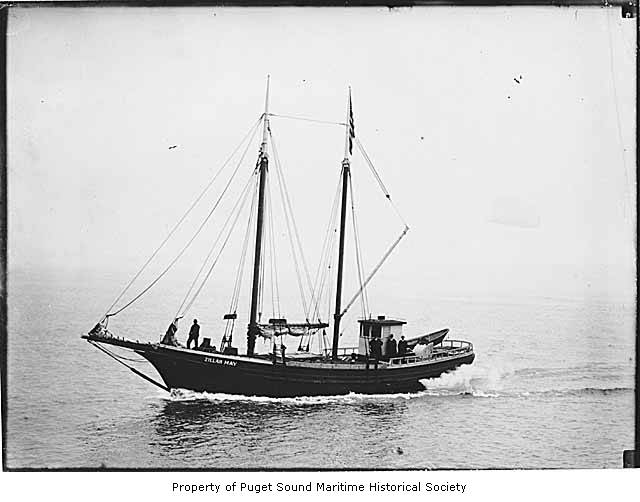
With Alaska’s fur-bearing population dwindling and the cost of funding its holdings in Russian-Alaska on the rise, Russia sold Alaska to the U.S. in 1867. By then, Kodiak’s resource-based economy had already begun to swing from furs to fish. In the late 1800s West Coast fish processing companies, upon learning of Kodiak’s prolific salmon runs, had built canneries throughout the region and brought Filipino and Chinese crews to Kodiak to run them. In the early 1900s, development of cold storage plants allowed the West Coast halibut schooners to fish further away in Southeast Alaska and, later, the halibut grounds off Kodiak Island. Many onboard were Scandinavian fishermen who came ashore and made Kodiak and other small towns in Alaska their home.